We Have Always Lived in the Castle PDF: A Comprehensive Guide (Updated 04/21/2026)

Shirley Jackson’s chilling novel, readily available as a PDF, explores themes of isolation and family secrets. A PDF copy, like the one found on angelamorales.net, offers convenient access to this gothic tale, first published in 1962.
Overview of the Novel
We Have Always Lived in the Castle, penned by the masterful Shirley Jackson, is a captivating and unsettling gothic mystery published in 1962. The narrative unfolds through the eyes of Mary Katherine Blackwood, an eighteen-year-old girl living in isolation with her sister, Constance, and their ailing uncle in the decaying Blackwood Manor. Their secluded existence stems from a past tragedy – the poisoning of the Blackwood family six years prior, an event for which Constance was acquitted but remains deeply suspected by the hostile villagers.

The story delves into the psychological complexities of the Blackwood sisters, their unique worldview, and their desperate attempts to maintain their fragile sanctuary. The arrival of their cousin, Julian, disrupts their carefully constructed world, bringing with him the promise of connection but also the threat of exposure and further turmoil. Jackson expertly crafts an atmosphere of mounting tension and paranoia, exploring themes of alienation, societal judgment, and the dark undercurrents of family secrets. The novel, often studied for its literary merit, continues to resonate with readers due to its haunting prose and exploration of the human psyche.
Availability of the PDF Version
A PDF version of We Have Always Lived in the Castle offers convenient and accessible reading for students, researchers, and enthusiasts of Shirley Jackson’s work. Numerous online sources host digital copies, though verifying their legitimacy is crucial. As of today, April 21, 2026, a copy is available at angelamorales.net, published on April 20, 2024.
The proliferation of PDFs allows for easy portability and offline reading on various devices – computers, tablets, and smartphones. However, caution is advised when downloading from unverified websites, as these may contain malware or corrupted files. Legitimate sources often include publisher information and copyright notices. Utilizing institutional library databases or reputable ebook retailers is recommended to ensure a safe and high-quality reading experience. The accessibility of the PDF format significantly enhances the novel’s reach and facilitates academic study.

Shirley Jackson and Her Literary Style
Shirley Jackson, a master of psychological suspense, is renowned for her unsettling exploration of societal anxieties and the darkness lurking beneath the surface of everyday life. Her unique literary style blends gothic elements with realism, creating a pervasive atmosphere of unease. Jackson expertly employs unreliable narrators and ambiguous events, forcing readers to question perceptions of reality, a technique prominently displayed in We Have Always Lived in the Castle.
The novel’s PDF availability allows for close textual analysis of Jackson’s distinctive prose. Her work often features isolated settings and eccentric characters, mirroring the Blackwood family’s seclusion. Jackson’s subtle yet powerful storytelling relies on implication and suggestion rather than explicit explanation. This approach, coupled with her sharp wit and keen observation of human behavior, solidifies her position as a significant figure in 20th-century American literature. Studying the PDF facilitates a deeper understanding of her stylistic nuances.
Plot Summary: The Blackwood Family’s Isolation
We Have Always Lived in the Castle, accessible in PDF format, centers on the Blackwood family – or rather, what remains of it. Following a mysterious arsenic poisoning that killed most of the family six years prior, Mary Katherine “Merricat” Blackwood, her sister Constance, and their uncle Julian live as outcasts in their ancestral home. The family is ostracized by the villagers, who suspect Constance was responsible for the deaths.

The PDF reveals a narrative driven by Merricat’s protective nature and her increasingly desperate attempts to maintain their secluded existence. The arrival of cousin Charles disrupts their fragile peace, threatening to expose long-held secrets and unravel the family’s carefully constructed world. The story unfolds through Merricat’s unique and often unsettling perspective, highlighting the psychological toll of isolation and the lengths to which she will go to safeguard her family, as detailed within the PDF’s pages.
Main Characters: Mary Katherine “Merricat” Blackwood
Mary Katherine, or Merricat, as she’s known, is the compelling narrator of Shirley Jackson’s novel, readily available as a PDF. An eighteen-year-old, she’s fiercely protective of her sister, Constance, and deeply distrustful of outsiders. The PDF reveals Merricat’s unconventional personality; she admits to disliking washing and preferring the company of plants, specifically the deadly nightshade, Amanita phalloides.
Merricat employs magical thinking and rituals to ward off perceived threats to her family, demonstrating a complex psychological state shaped by trauma and isolation. The PDF showcases her unique worldview, where she feels a strong connection to Blackwood Manor and a sense of ownership over its boundaries. She’s intelligent, observant, and possesses a dark, rebellious streak, making her a fascinating and unreliable narrator, fully explored within the PDF’s narrative.
Main Characters: Constance Blackwood
Constance Blackwood, Merricat’s sister, is a central figure in Shirley Jackson’s novel, accessible in PDF format. Unlike her sister, Constance is presented as outwardly conventional, though harboring a hidden past. The PDF reveals she was once accused of poisoning her family, a charge that led to their deaths and the Blackwood’s subsequent isolation.
Constance’s primary focus is maintaining a semblance of normalcy and protecting Merricat. She is the caretaker, preparing meals and attempting to engage with the outside world, though always with a cautious demeanor. The PDF illustrates her quiet strength and resilience, despite the trauma she has endured. While Merricat actively resists societal norms, Constance passively accepts them, creating a dynamic tension between the sisters. Her character, fully realized within the PDF’s pages, represents a different coping mechanism for shared tragedy.

Main Characters: Julian Blackwood
Julian Blackwood, a distant cousin, arrives at Blackwood Manor seeking to disrupt the sisters’ isolated existence, as detailed within the novel’s PDF version. He represents the outside world intruding upon Merricat and Constance’s carefully constructed reality. The PDF portrays Julian as charming yet manipulative, quickly ingratiating himself into their lives while harboring ulterior motives.
Julian’s presence throws the sisters’ fragile equilibrium into chaos. He seeks financial gain and attempts to exploit their vulnerability, revealing a selfish and opportunistic nature. The PDF highlights his attempts to control Constance, seeing her as a means to an end. He embodies the threat that the outside world poses to the Blackwood sisters’ unique bond and their secluded lifestyle. Julian’s character, fully explored in the PDF, serves as a catalyst for the novel’s escalating tension and ultimately, its dramatic climax.
Key Themes: Isolation and Outsider Status
The PDF of We Have Always Lived in the Castle profoundly explores the themes of isolation and outsider status, central to understanding the Blackwood family’s plight. Merricat and Constance are ostracized by the village following the family tragedy, forcing them into a self-imposed exile within Blackwood Manor. This isolation, vividly depicted in the PDF, shapes their perceptions of the world and their interactions with others.
The novel, accessible in PDF format, demonstrates how societal rejection breeds a unique and often distorted worldview. Merricat’s magical thinking and protective rituals are direct responses to her feeling of being an outsider. The PDF reveals how the sisters’ detachment from conventional society allows them to create their own internal reality, fiercely guarded against intrusion. Their outsider status isn’t merely physical; it’s a deeply ingrained psychological state, meticulously detailed throughout the PDF’s narrative.
Key Themes: Family Secrets and Trauma
The PDF version of Shirley Jackson’s We Have Always Lived in the Castle masterfully unveils the corrosive power of family secrets and the lingering effects of trauma. The unexplained deaths within the Blackwood family, a core element accessible within the PDF, cast a long shadow over Merricat and Constance’s lives, shaping their present reality and fueling the villagers’ animosity.

As revealed in the PDF, the novel doesn’t offer easy answers regarding the past, instead focusing on the psychological impact of unresolved trauma. The sisters’ isolation is, in part, a desperate attempt to shield themselves from further scrutiny and to maintain control over their family’s narrative. The PDF highlights how secrets, when left unaddressed, can fester and distort relationships, creating a breeding ground for suspicion and fear. The downloaded PDF allows readers to dissect the subtle clues and unravel the complex web of family history.

Setting and Atmosphere: Blackwood Manor
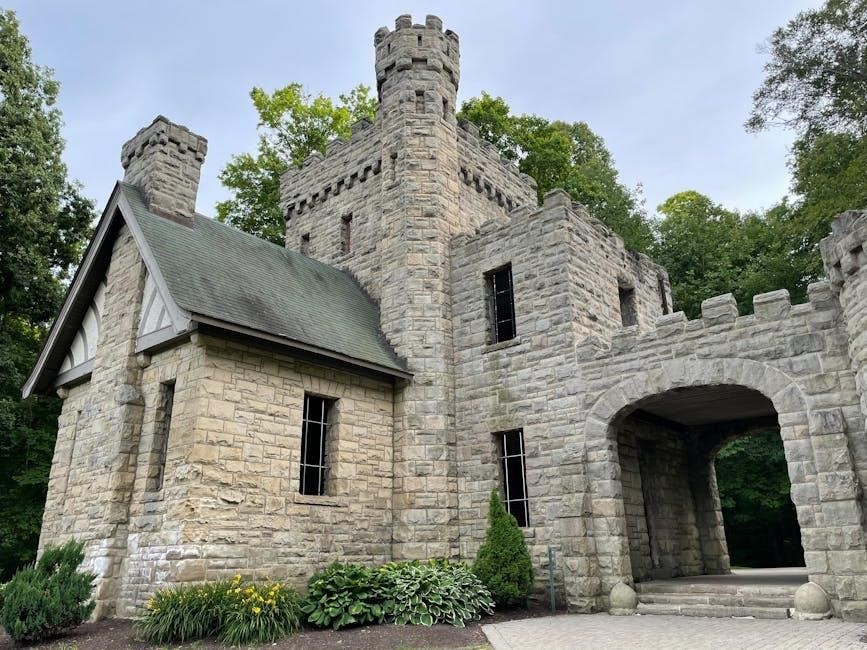
Blackwood Manor, vividly depicted within the PDF of We Have Always Lived in the Castle, is far more than just a location; it’s a character in itself, deeply intertwined with the Blackwood family’s fate. The PDF reveals how Jackson uses the manor to create a palpable atmosphere of decay, isolation, and claustrophobia, mirroring the sisters’ internal states.
The house, described in detail within the PDF’s text, is presented as a fortress, a sanctuary, and a prison all at once. The Blackwoods’ meticulous order and resistance to change, as noted in the PDF excerpt, contribute to the manor’s unsettling stillness. This sense of stagnation reinforces the theme of being trapped by the past. Accessing the PDF allows readers to fully appreciate how the physical space of Blackwood Manor embodies the family’s secrets and the weight of their trauma, becoming a symbol of their fractured existence.
Symbolism: The Castle and its Representation
The “castle” referenced in the title, and readily explored within the PDF version of We Have Always Lived in the Castle, operates as a potent symbol of both protection and confinement. The PDF reveals how Blackwood Manor, perceived as a fortress by Merricat, represents her attempt to shield herself and Constance from a hostile outside world. This self-imposed isolation, detailed in the PDF’s narrative, is a direct response to the trauma of their family’s past.
However, the PDF also demonstrates how the “castle” symbolizes the Blackwoods’ entrapment within their own history and secrets. The meticulous order within the house, as highlighted in the provided text from the PDF, reflects a desperate attempt to control a chaotic reality. Ultimately, the castle embodies the duality of the Blackwoods’ existence – a desire for safety versus the suffocating weight of their past, making it a central symbolic element accessible through the PDF.
Critical Reception and Analysis
We Have Always Lived in the Castle, easily accessible through a PDF copy, garnered significant critical attention upon its release and continues to be analyzed today. The novel’s unsettling atmosphere and unreliable narrator, fully experienced when reading the PDF, were initially met with mixed reviews, some finding it too dark and unconventional. However, it quickly gained a cult following.
Modern critical analysis, facilitated by the widespread availability of the PDF, often focuses on the novel’s exploration of societal anxieties, particularly regarding conformity and the ostracization of those deemed “different.” The PDF allows for close reading of Jackson’s masterful prose and symbolic imagery. Scholars frequently examine the themes of female agency and the psychological impact of trauma, all readily apparent within the PDF’s pages. The novel’s enduring power lies in its ability to disturb and provoke thought, making it a staple of gothic literature studies, easily shared and studied via PDF format.
The PDF’s Role in Accessibility and Study
The availability of We Have Always Lived in the Castle as a PDF significantly enhances its accessibility for students, researchers, and casual readers alike. A digital copy, such as those found online, removes barriers related to cost and physical availability, allowing wider engagement with Shirley Jackson’s work. The PDF format facilitates convenient study, enabling features like searchability, annotation, and digital bookmarking.
For academic purposes, the PDF allows for easy quotation and analysis within essays and research papers. Students can readily share excerpts and discuss interpretations. The portability of a PDF means the novel can be studied on various devices, fostering a more flexible learning experience. Furthermore, the PDF’s text-based nature supports text-to-speech functionality, aiding accessibility for visually impaired readers. Ultimately, the PDF version democratizes access to this important work of American literature.

Where to Find a Reliable PDF Copy
Locating a trustworthy PDF copy of We Have Always Lived in the Castle requires careful consideration. One source, angelamorales.net, currently hosts a PDF version (we_have_always_lived_in_the_ca_-_shirley_jackson_21985.pdf), published on April 20, 2024. However, verifying the legitimacy of any online PDF is crucial to ensure you’re accessing a complete and accurate edition of Shirley Jackson’s novel.
Reputable online libraries and digital bookstores sometimes offer legally obtained PDFs for purchase or loan. Project Gutenberg, while not currently listing this specific title, is a reliable source for classic literature in digital formats. Always prioritize sources that respect copyright laws. Be cautious of websites offering “free” PDFs from unknown origins, as these may contain malware or incomplete versions. Checking publication dates and file integrity can help determine reliability before downloading.
Potential Risks of Downloading PDFs from Unverified Sources
Downloading PDFs of We Have Always Lived in the Castle from unverified websites carries significant risks. These files can harbor malware, viruses, and other malicious software that compromise your device and personal data. Illegitimate sources often distribute corrupted files, resulting in incomplete or unreadable copies of the novel, hindering your reading experience and academic study.
Furthermore, obtaining PDFs through unauthorized channels supports copyright infringement, undermining the author’s and publisher’s rights. Such downloads may expose you to legal repercussions. Even seemingly harmless PDFs can contain hidden trackers that monitor your online activity. Prioritize reputable sources like official bookstores or digital libraries to mitigate these dangers. Always scan downloaded files with updated antivirus software before opening them, and exercise caution when encountering unusually large or suspiciously named PDFs.
Discussion Questions and Further Reading
Having explored We Have Always Lived in the Castle, consider these discussion points: How does Merricat’s perspective shape our understanding of the Blackwood family’s isolation? What role does the village play in perpetuating their ostracism? Analyze the symbolism of Blackwood Manor and its connection to the family’s history. Explore the themes of paranoia and the unreliable narrator.

For further reading, delve into Shirley Jackson’s other works, such as “The Haunting of Hill House” and “The Lottery,” to observe recurring themes of societal anxieties and psychological suspense. Critical analyses of Jackson’s work, like those found in academic journals, offer deeper insights into her literary techniques. Examining gothic literature and its conventions will also enrich your understanding of the novel’s atmosphere and motifs. Accessing the PDF version facilitates close reading and annotation for detailed study and analysis.
Leave a Reply
You must be logged in to post a comment.